TL;DR: Do you need backlinks to rank on Google? Not necessarily. Google’s own Gary Illyes confirmed at PubCon Pro in September 2023 that backlinks are no longer a top three ranking factor, and QED Web Design tested this with a real experiment that proved it.
For UK small businesses being told they need to spend thousands on link building before their site will appear in search results, this matters. The SEO industry has a backlink obsession, and some podcasters and agencies still push the idea that authority only comes through links. That advice is outdated and, for most small business websites, misleading.
Below, I share the results of my own experiment, break down what Google has actually said, and explain what to focus on instead. I also recommend two SEO podcasts worth your time: one that got me thinking, and one that gave me the answers.
Key Takeaways: Do you need Backlinks
Google’s Gary Illyes stated at PubCon Pro in September 2023 that backlinks are not a top three ranking factor and have not been for some time.
QED Web Design built a recipe website with zero backlinks, no social media profiles, a clean domain, and no Google Search Console or GA4 connected. It ranked on page one for multiple keywords.
Google has over 200 known ranking factors. Backlinks are one of them, but content quality, relevance, internal linking and technical SEO all carry significant weight.
The Google Penguin algorithm, which targeted manipulative link building, was integrated into Google’s core algorithm in September 2016 and now runs in real time.
For most UK small businesses, investing in content, site structure and technical SEO will deliver better returns than chasing backlinks.
Do you need backlinks to rank? That question has been rattling around in my head for the past twelve months, I’ve turned to podcasts at night when I go to bed, I wanted to increase my knowledge of SEO and fill the gaps.
I flicked through the selection on my app on SEO, and one caught my eye; The Grumpy SEO Guy. The initial episodes resonated with me and the rage he had for grifters, and I continued to listen.
However, as time went on the theme was the same:
“You need authority to rank, the only way to get authority is through backlinks”.
I run QED Web Design, a WordPress web design agency based in South Devon with over 15 years of experience building sites for UK small businesses, and we create content for SEO. SEO is baked into everything we do, so when the Grumpy SEO Guy kept insisting that authority through backlinks was the only path to rankings, I decided to test it myself.
What I found contradicted almost everything that podcast was preaching.
Are Backlinks Still a Ranking Factor in 2026?
Yes, backlinks remain a ranking factor, but their influence has been significantly reduced compared to even five years ago. They are no longer the dominant signal that much of the SEO industry still treats them as.
Backlinks, which are links from other websites pointing to yours, were once the foundation of how Google assessed a page’s value. The original PageRank algorithm was built on this concept: more links from reputable sources meant a more trustworthy page. For years, that logic held, and an entire industry grew around acquiring links.
The problem is that some corners of the SEO world never moved on. Certain podcasts, agencies and LinkedIn gurus still frame backlinks as the single most important factor. If you are a small business owner being quoted £2,000 a month for link building services, you deserve to know that Google itself has been downgrading the importance of links for years.
QED has seen this firsthand. Our own blog at weareqed.com ranks for competitive SEO terms without any paid link building, guest post outreach or private blog network activity. The content does the work.
That is not to say links are worthless. It is to say they are one signal among hundreds, and for most small business websites, they should not be the priority.
We will look at what Google has actually said on the matter in the next section.
What Has Google Actually Said About Backlinks?
Google has been publicly downplaying backlinks as a ranking factor since at least 2022, with the most direct statement coming from Gary Illyes:
“We need very few links to rank pages… Over the years we’ve made links less important.”
And he reinforced it at PubCon Pro in Austin in September 2023.
Illyes, an analyst on the Google Search team, was asked whether backlinks were still among the top three ranking factors. His response was clear: he believes people overestimate the importance of links, that he does not agree they are in the top three, and that they have not been for some time (Search Engine Land, 2023).
He even cited an example of a page with zero internal or external links ranking in position one for a competitive term, found solely through a sitemap.
That statement carried extra weight because it directly contradicted a 2016 comment from Andrey Lipattsev, a Google search quality senior strategist, who had listed backlinks alongside content and RankBrain as the top three ranking factors. In the space of seven years, Google’s own people shifted from “top three” to “not even close.”
Other Google representatives have echoed the same message. Duy Nguyen from Google’s search quality team said during a November 2022 SEO Office Hours session that the significance of backlinks as a signal has fallen dramatically compared to when Google Search first launched. John Mueller, Google’s Senior Search Analyst, has stated his belief that the weighting of links will continue to drop as search technology improves (Google Search Off the Record podcast).
One important detail that often gets missed: Illyes also noted that there is no universal top three. The factors that matter most vary from site to site, niche to niche. For a major news publisher, backlinks might be highly relevant. For a local plumber in Exeter, content quality and Google Business Profile optimisation will almost certainly matter more.
What Happens When You Build a Site With Zero Backlinks?
A website with no backlinks, no social media presence, and no analytics connected to Google can still rank on page one. I tested this personally, and the results were better than I expected.
After months of listening to The Grumpy SEO Guy podcast, which repeatedly pushed the message that authority only comes through backlinks, I wanted to see if that was actually true. So I built an experimental website from scratch. Clean domain. No social media profiles. No backlinks. No links to QED. And crucially, no Google Search Console or GA4.
Google would have to find the site on its own and crawl the sitemap without any help.
Because of my 27 years working in and around Michelin-starred kitchens during my former career in hospitality, I made it a recipe website. No fluff. No 800-word intros about how my grandmother inspired the dish, or because a SEO plugin says you need to reach a thresholds. Just recipes, properly structured, with the kind of useful content that search engines reward:
- Relevant meta descriptions & titles
- Correct heading structures
- Alt tags for images
- WebP images
And so on.
Now, to be clear, the secret sauce that I missed out of the above list is ‘internal links’ and that really works well on recipe websites. It’s because they show Google how content connects thematically.
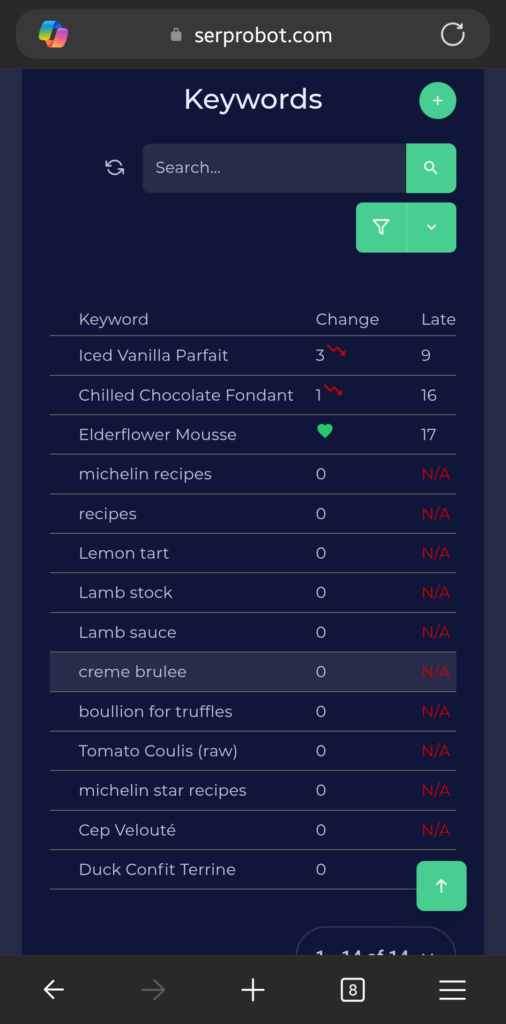
I published over 70 posts at a rate of roughly two per day, then tracked the results with a SERP monitoring tool. The site ranked on page one for multiple recipe terms. No backlinks. No social signals. No authority in the traditional sense. Just well-structured, genuinely useful content with solid internal linking.
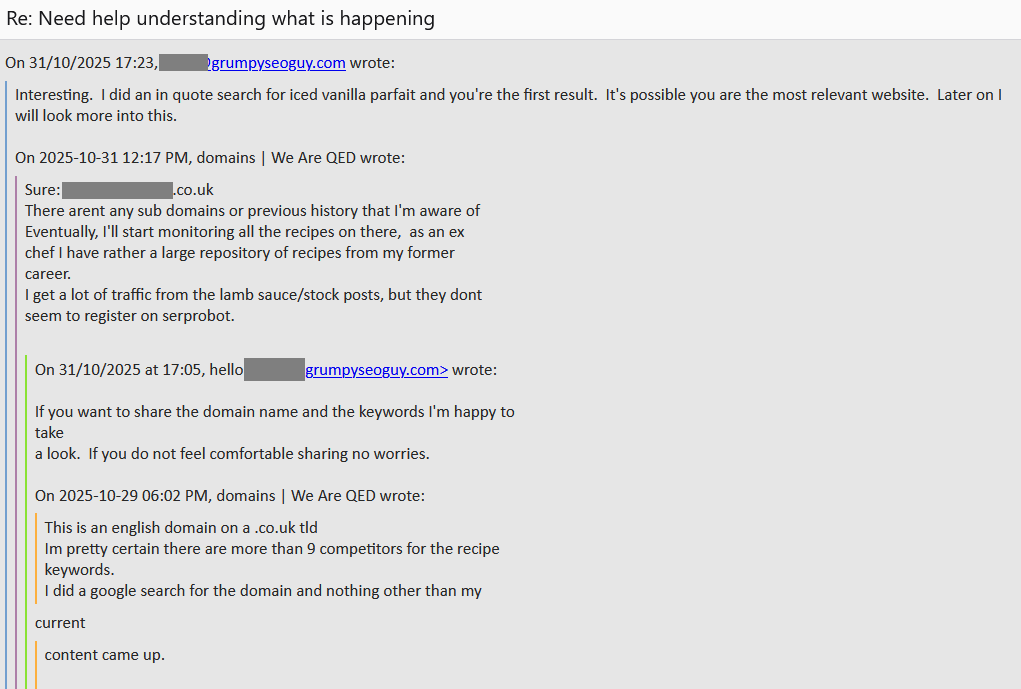
When I emailed The Grumpy SEO Guy about this, he acknowledged that it was possible. His position, to be fair, is more nuanced than the podcast sometimes makes it sound. He frames backlinks as one of four things you need to rank: no penalties, content, relevance and authority. But the consistent message across episodes is that authority comes from backlinks, and without them, you will not rank. My recipe site proved otherwise.
The caveat here is important. Recipe content is a specific niche.
Competition levels vary. A local electrician in Torquay faces different ranking dynamics than a recipe blog. But the principle holds: if your content is genuinely useful and your site is technically sound, Google can and will rank it without backlinks.
Which SEO Podcasts Are Worth Listening To?
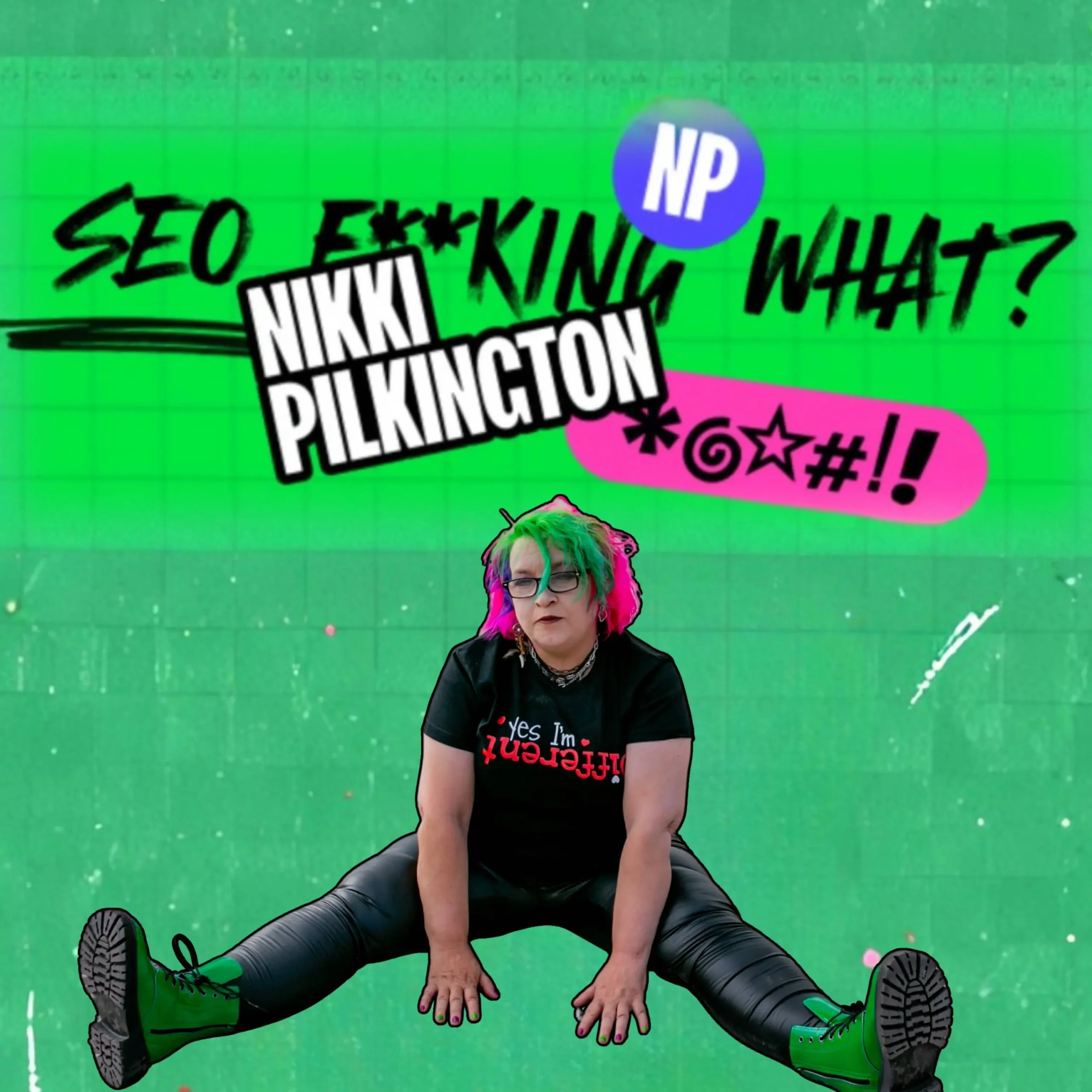
Two SEO podcasts shaped my thinking on backlinks: The Grumpy SEO Guy got me asking the questions, and Nikki Pilkington’s SEO F**king What?!? gave me the answers.
I started with The Grumpy SEO Guy because the early episodes resonated with me. The host’s frustration with SEO grifters and snake-oil merchants felt genuine. He clearly knows what he is doing after 14 years running an agency.
But as I listened through more episodes, a pattern emerged: every road led back to backlinks. Authority comes from backlinks. You need backlinks to rank. The only way to compete is to build links. It became a mantra.
That single-note message is where I started to have doubts. If backlinks were truly the only path to authority, how was my experimental recipe site ranking without a single one? Even Grumpy couldn’t answer it.
The answer came from Nikki Pilkington and her podcast, SEO F**king What?!? A quick warning: do not play this one on speakers around unsuitable ears. The name tells you everything about the tone.
Nikki pulls no punches with the SEO grifters and, more importantly, she is genuinely on the side of small business owners. She understands that micro and small businesses in the UK cannot afford to throw £2,000 a month at agency SEO and wait six months for results. Her style is direct, sometimes blunt, but always clear. She uses everyday language that anyone can follow, regardless of technical background.
Her content on backlinks went a long way to answering the questions my recipe site experiment had raised. She references the Gary Illyes quotes, breaks down the Google Penguin history, and explains why the SEO industry’s obsession with link building is often misplaced.
She has also written extensively about how the concept of “toxic backlinks” was invented by SEO tool companies to sell their services, noting that Google does not even have an internal concept of toxic backlinks (Nikki Pilkington, 2025).
For anyone running a small business website in the UK, SEO F**king What is worth subscribing to. Fifteen minutes per episode, one topic, practical advice you can act on. If you want the opposite of the usual jargon-heavy, retainer-selling SEO content, start there.
For a deeper look at how content-led SEO works in practice, our recruitment SEO content case study shows the approach in action.
How Did the Penguin Update Change Link Building?
Google’s Penguin algorithm update, first launched in April 2012, fundamentally changed how backlinks affect rankings by penalising manipulative link building. Since September 2016, Penguin has been part of Google’s core algorithm and runs in real time.
Before Penguin, SEO was largely a numbers game. The more links pointing at your site, the better you ranked, regardless of where those links came from. Agencies built private blog networks (PBNs), bought links in bulk, and stuffed forums with spam comments. It worked, until Google decided to stop it.
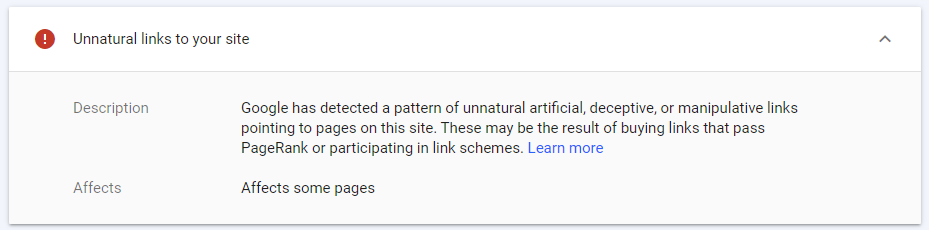
Penguin 1.0 initially affected roughly 3.1% of search queries globally (Google, Inside Search – Matt Cutts). Subsequent versions refined the approach, and by the time Penguin 4.0 launched in September 2016, three major changes were in place. The algorithm became real-time, meaning sites no longer had to wait months for the next refresh to recover from a penalty. It became more granular, targeting specific pages rather than entire domains. And it shifted from penalising sites with bad links to simply devaluing those links, ignoring them rather than actively punishing the site.
The practical effect for UK small businesses is significant. If your site has a handful of random spam links from overseas (and most sites do, because that is just how the internet works), Google will likely ignore them rather than penalise you. You do not need to spend hours running “toxic backlink” audits unless Google has specifically sent you a manual action notification in Search Console.
The broader takeaway from Penguin’s evolution is that Google has been systematically reducing the influence of links on rankings for over a decade.
As of 2026, machine learning, natural language understanding, content quality and user experience signals all carry substantial weight. The days when you could buy your way to page one with links are gone, and anyone still selling that approach is selling something outdated.
The next section covers what to focus on instead.
What Should Small Businesses Focus on Instead of Backlinks?
Small businesses should prioritise content quality, technical SEO, internal linking and site structure. These factors are within your direct control and deliver measurable results without the cost and risk of link building.
Content is the single most important element. Google’s Illyes said it plainly: the top ranking factor is content (PubCon Pro, 2023). Not just any content, but material that genuinely answers the questions your potential customers are asking.
Previously I wrote a blog based on Hospitality (Chef Hermes, for those interested), it attracted over, on average, 11,000 unique monthly visitors , it was achieved by focusing on this principle. Every post is written to solve a specific problem, not to hit a word count or impress an SEO plugin.
Internal linking is the factor most small business websites neglect. My recipe site experiment proved how powerful it can be. By linking related recipes to each other, I showed Google how the content connected thematically. Google uses internal links to understand context, hierarchy and relationships between pages.
A well-structured internal linking strategy can replicate much of the “authority” signal that backlinks are supposed to provide, because it demonstrates topical depth.
Technical SEO covers the fundamentals that many sites get wrong: page speed, mobile usability, correct heading structures, clean URLs, image optimisation, and ensuring Google can actually crawl and index your pages. When we produced our analysis of whether SEO is dead, one of the key findings was that sites hit hardest by recent algorithm updates tend to have technical debt, not a backlink problem.
For UK-specific businesses, Google Business Profile optimisation is often more valuable than any backlink campaign. If you are a café in South Devon or a plumber in Plymouth, your local profile, reviews and NAP (name, address, phone number) consistency across directories will have a more direct impact on your visibility than a guest post on an unrelated blog.
None of this means you should ignore backlinks entirely. But if your budget is limited, and for most small businesses it is, spending that budget on content and technical improvements will almost always deliver a better return.
When Do Backlinks Actually Matter?
Backlinks still matter in competitive niches where multiple sites have comparable content quality, technical SEO and topical authority. In those situations, links from relevant, authoritative sources can be the tiebreaker.
The common misconception I want to correct here is the idea that backlinks are either essential for everyone or useless for everyone.
Neither is true. The reality sits in the middle, and it depends heavily on what you are competing for.
If you are a national insurance comparison site trying to rank for “cheap car insurance UK,” you are in a fiercely competitive space where every major player has strong content, solid technical foundations and deep topical authority. In that scenario, your backlink profile genuinely matters. Links from trusted industry publications, financial news sites and government resources can differentiate you from competitors who are otherwise equal.
But most UK small businesses are not competing at that level. A wedding photographer in Bath, an accountant in Bristol, a web designer in Devon: these businesses compete in local or niche markets where the competition is thinner. In those markets, publishing helpful content, getting your technical SEO right and building a solid internal linking structure will often be enough to rank.
The other scenario where backlinks matter is when they happen naturally. If someone links to your blog post because it genuinely helped them, that is a positive signal. The issue is not with backlinks themselves but with the industry built around artificially manufacturing them.
As of 2026, with AI search citations becoming increasingly relevant, being mentioned by AI tools like ChatGPT or Google’s AI Overviews may carry more weight for some businesses than a traditional backlink from a mid-tier blog.
Google now uses over 200 known ranking factors, with machine learning, neural networks and natural language processing all playing significant roles. Backlinks are one piece of a much larger picture. For most small businesses, they should be the last thing you optimise, not the first.
Conclusion
Backlinks are not dead, but they are not the golden ticket the SEO industry has spent two decades selling them as. Google’s own team has been saying this publicly since at least 2022, and my own experiment with a zero-backlink recipe website proved that good content and solid technical SEO can rank without a single external link.
If you are a small business owner being told that backlinks are the only way to rank, question that advice. Look at your content, your site structure, your internal linking, your page speed, and your Google Business Profile first. Those are the foundations. Backlinks are a bonus, not a requirement.
And if you want to learn more about SEO without the jargon, give Nikki Pilkington’s SEO F**king What podcast a listen. Just keep the volume down if the kids are around.